Transitions often bring new demands for space, but they don't necessarily change the small routines that make someone feel like themselves.
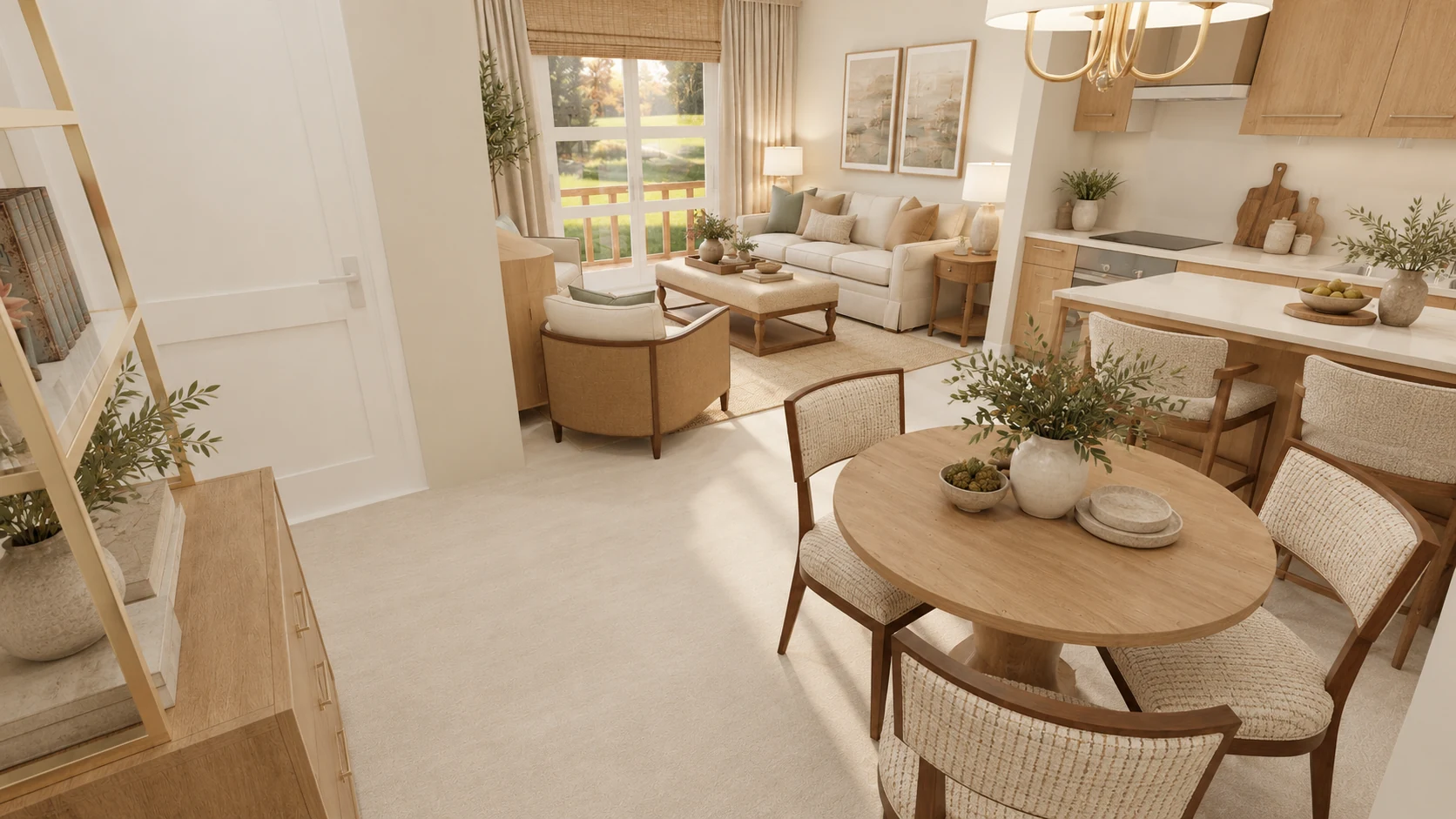
One client lived in a compact open-plan area expected to provide an entry, kitchen, office, dining area and living space. She wanted a substantial desk, yet in practice she didn't use the desk. Her papers accumulated on the round dining table, which had become her preferred working surface. The same table also held puzzles she liked to work on over time.
A conventional solution might have been to make the desk more prominent and insist that paperwork belong there. I thought that would ignore what the room had already shown us.
Instead, the dining area needed to embrace its multiple roles. Papers required accessible storage close enough to make clearing them easy. An ongoing puzzle needed a movable tray and a real destination for that tray when people came for dinner. The aim was to make the transition between activities quick enough to feel effortless—not to require a major cleanup every time the room changed its purpose.
The most important detail was not the furniture style; it was the speed with which the space could change functions. If the client needed to clear the dining table for guests, it had to be simple enough to happen in less than half a minute. Otherwise, a perfectly considered storage cabinet could still be too inconvenient to use.
For papers, that meant thinking about where the documents naturally collected and providing a place close to the work surface rather than a desk positioned elsewhere. For puzzles, the solution included a movable tray large enough to let an in-progress activity remain intact, plus a place where the tray could actually land. Without that second destination, the tray would become another object looking for a home.
An effective transition in a person's life isn't always represented by replacing everything around them. Sometimes it's recognizing that the same behaviors will continue and ensuring the new layout or smaller space can receive them. That kind of continuity can allow change without making a person feel that their familiar routines have become an inconvenience.
That approach freed valuable square footage previously reserved for a desk that wasn't serving her.
I don't see this as designing around a bad habit. I see it as respecting the way someone naturally uses space, then giving that activity an appropriate home. A life in transition needs continuity as well as change.