
“If walls could talk” is a familiar thought. I often find myself wondering what the floors have already written down.
Homes accumulate evidence. A floorboard wears where generations walked. A table acquires a nick that may still prompt a story years later. Beneath one layer of wallpaper, a renovation may uncover several more. A painted-over switch plate or architectural detail can unexpectedly reveal craftsmanship that was hidden in plain sight.
What interests me most is that the archive is not organized for us. Nobody deliberately labeled the scratch in a floorboard or the history concealed behind several layers of wallpaper. Some evidence is recognized because a member of the family remembers the moment it was made. Other evidence comes from people who lived there before the current occupants and whose names may not be known. Much of it only becomes visible when someone looks closely or starts renovating.
Consider an ornate switch plate that has been covered by coats of paint. The feature may have been there for years without anyone paying much attention. Once the paint is removed, the house offers a different version of itself. The detail isn't new, yet the discovery is. That fascinates me because a home can still surprise the people who think they know every corner of it.
A chip in a table might bring back a wonderful gathering; another mark might recall an experience the residents don't want to revisit. There's no obligation to carry every part of the record into the future. A renovation might preserve one older element while replacing nearly everything around it, or even remove a feature and bring it back in a different context. Those choices are not failures of authenticity. They are part of the continuing relationship between the building and the people who occupy it.
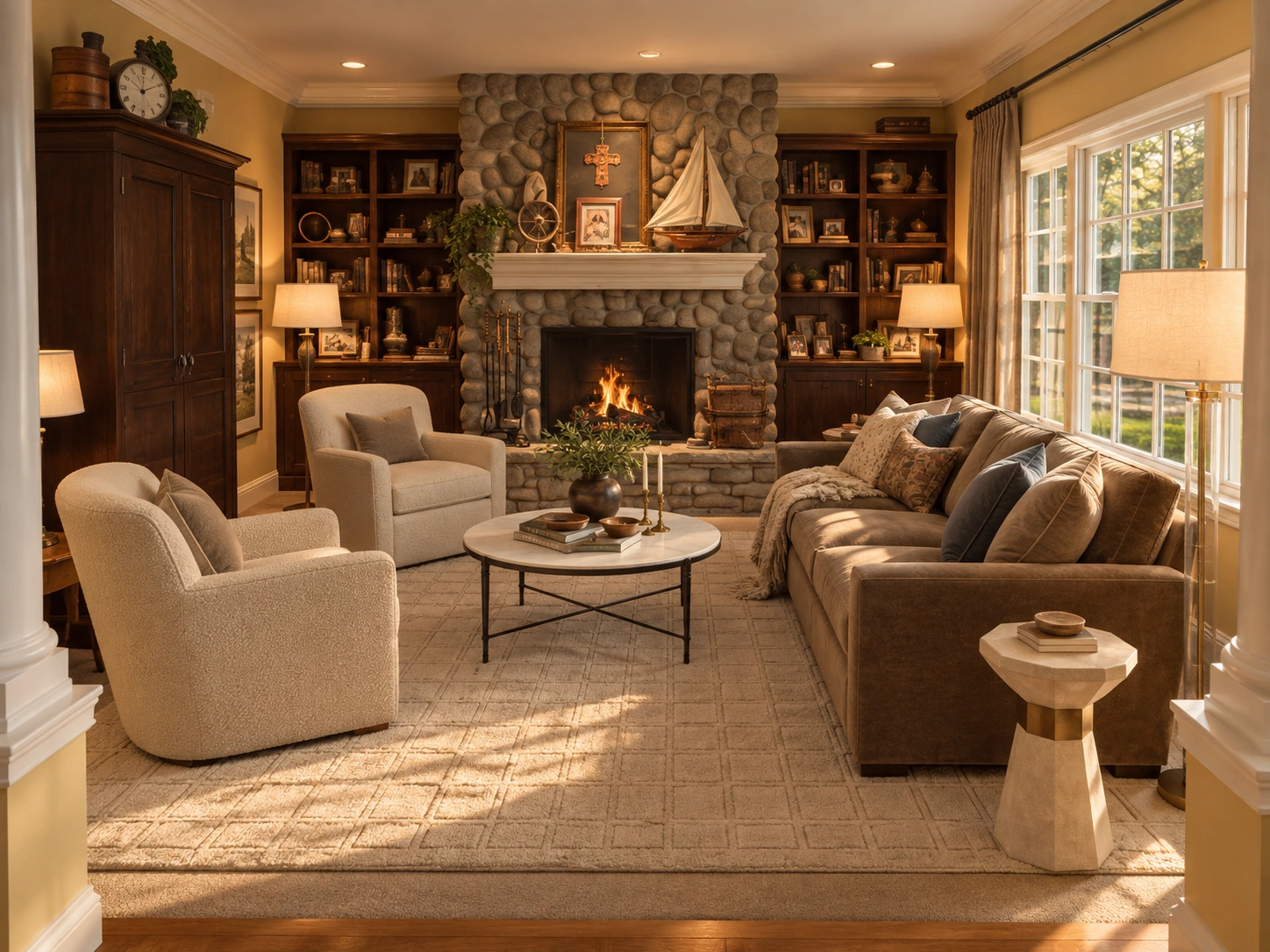
This also changes how I think about a completed design. We often photograph interiors as if they have reached a final state. The materials are clean, the pillows are arranged and the room is shown at a single moment. But the home will continue to register use: people will move through it, add objects, spill something, repair a surface, remember a gathering, or notice a detail they'd previously overlooked.
I don't want to confuse this with romanticizing damage or treating age alone as evidence of good design. Something old isn't automatically beautiful, and something new isn't automatically disconnected from history. The meaningful question is what we can learn from the traces already present and how we want to live with them now.
It is a kind of exploration. A house holds more information than a fixed image can ever convey, and much of that information belongs to the ordinary lives lived within it. The designer can finish a composition. The room's relationship with time is still unfolding.
These traces aren't necessarily deliberate heirlooms. They are the material consequences of people living, choosing, repairing, decorating and changing their surroundings. In that sense, a home can be read as an evolving record.
But an archive of lived experience is not an instruction to preserve every mark forever. Some traces carry joy; some are associated with difficult events; some belong to a previous life that a person is ready to leave behind. The decision to restore, remove, reinterpret or retain a feature can be as meaningful as the feature itself. I also love the element of discovery. Familiarity can make us stop noticing details that deserve attention. Pulling back a finish may reveal more than a decorating possibility; it may suggest the presence of other people who once called the place home.
A room can be beautifully designed on the day it is completed, but its history isn't completed with it. The people who live there continue to change it, and the room continues to gather the evidence of their lives.