
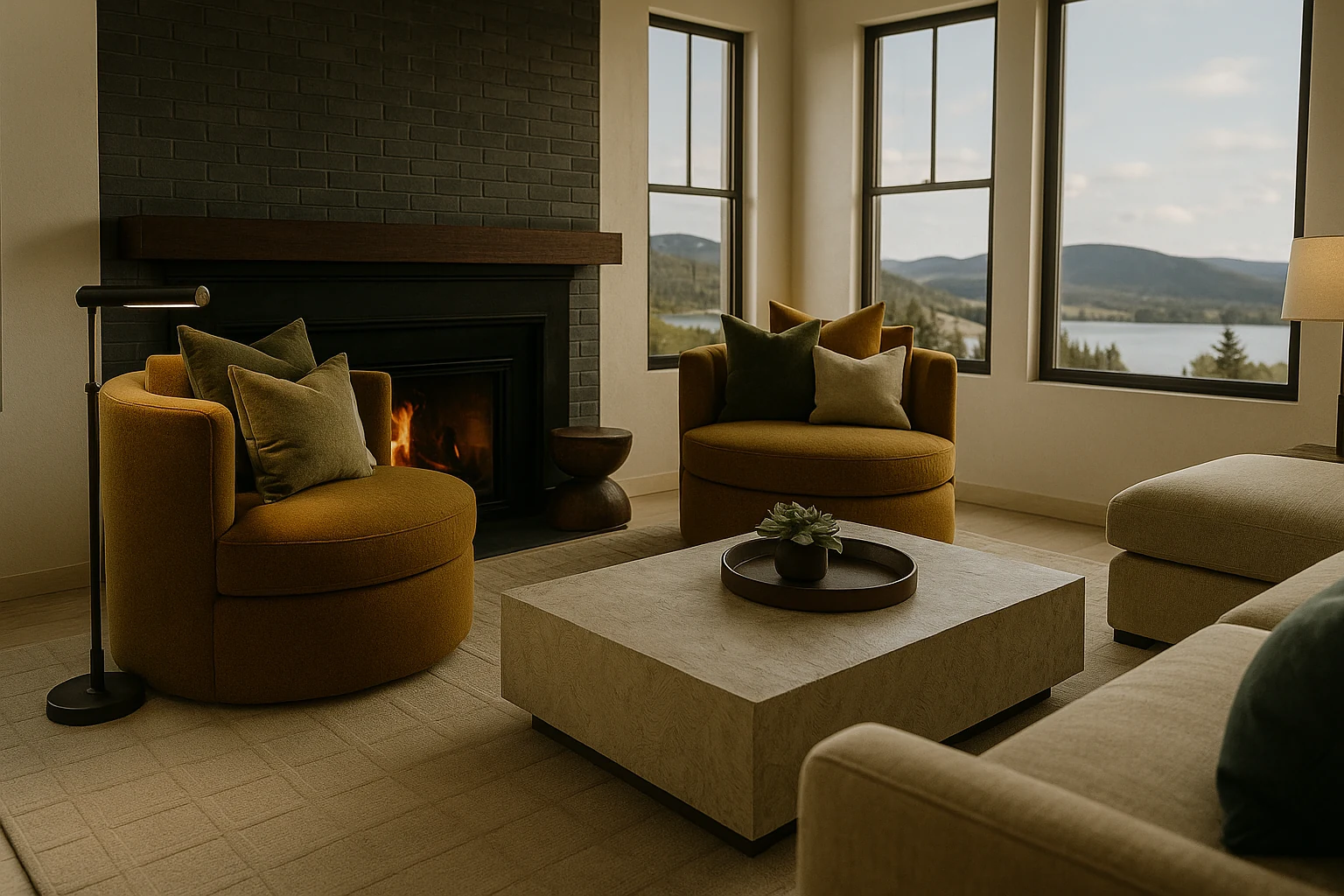
People often describe their needs as opposites. They want to work or spend time with family, rest or socialize, have a beautiful room or accommodate children and pets. Compromise can seem like the obvious answer, but sometimes it assumes too early that the experiences cannot coexist.
I am interested in integration: allowing different aspects of everyday life to remain meaningful without weakening all of them to make them fit together.
We make opposites of activities that don't always oppose one another. I have to finish my work before I can enjoy myself. I need to choose between resting and being social. I must accept a less beautiful home if I have children or pets. Sometimes those divisions are real. Often they're assumptions we have made before examining the experience itself.
What interests me is integration. I don't mean finding a middling solution where two experiences become weaker versions of themselves. I mean recognizing that different needs can already belong to the same individual—and that a design may allow them to exist together without either being diminished.
A relaxed conversation with someone can be a form of rest. Washing dishes may remain a chore, but the kitchen's outlook, materials and relationship to light can change how we experience the time spent there. A bath can be practical and, at the same time, an occasion to feel immersed in another environment. It's not that ordinary life must become a sequence of elaborate rituals. It's that enjoyment doesn't always have to wait until functionality ends.
Three feet behind the sofa
One project provided a very literal example. The family wanted an adult to be able to work while remaining connected to what was happening in the living room. Instead of a conventional narrow console behind the sofa, I considered a wider, counter-height table. It offered a usable work surface, with a view over the sofa toward the television and the family gathered there. Work was still possible without leaving the shared space.
But the space below the table also mattered. A shallow bookcase and small chairs made an area for the children—a little fort-like place of their own. Their books had somewhere to go, and the work surface above wasn't required to impersonate a play table. In approximately three feet of depth, adult work, children's play and the family's common room could remain distinct while occupying the same larger environment.
A person sitting behind the sofa didn't have to choose between being alone at a desk and being with the family. The children didn't have to convert the entire living room into their own activity area. The arrangement made a relationship possible without insisting that everyone participate in the same activity.
Integration can also mean separation
That may seem contradictory, but sometimes integration calls for different rooms to have different jobs. A child-friendly family room can coexist with a sitting room containing delicate or more refined furnishings. A quiet place for contemplation doesn't have to serve as an office or a television room as well. The larger household is integrated precisely because each experience has space to remain itself.
Other times, the work is in timing rather than room planning. A client may genuinely value an expensive rug but live with a new puppy or young child. We can design toward the intended room and make that particular purchase later. Refusing a premature purchase isn't the same as giving up the goal.
I find the notion of compromise unsatisfying when it begins by asking which part of someone's life must be sacrificed. It assumes the opposition first, then negotiates a loss. I'd rather ask whether there is an honest relationship between the experiences we are treating as incompatible. Sometimes the design reveals that the integration had already begun—as soon as the person recognized that both experiences belonged to them.