
Rooms communicate expectations, without issuing commands
How Furniture Shapes the Way We Behave
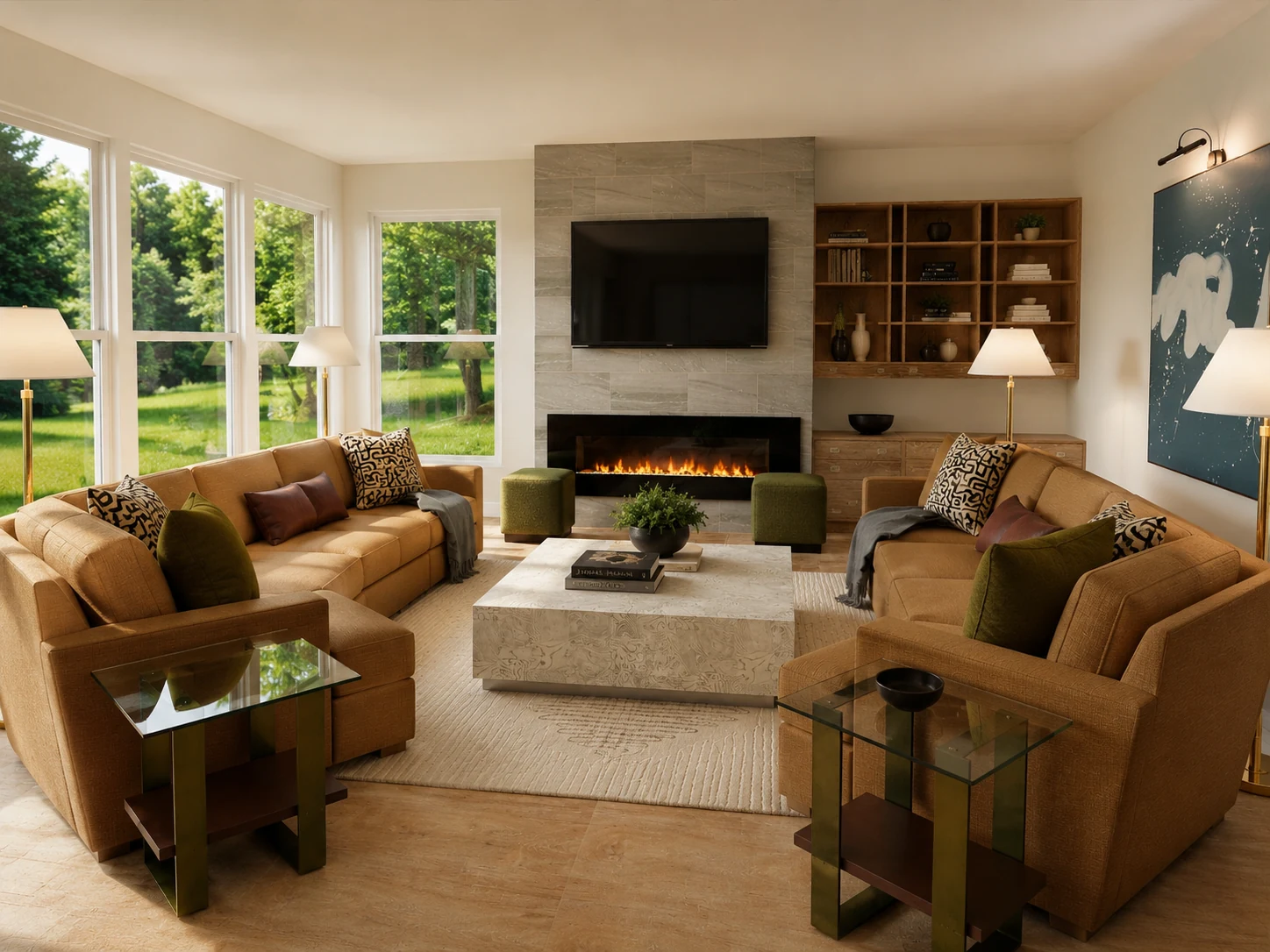
Furniture does more than fill the area shown on a floor plan. The way it is arranged—and the materials from which it is made—can influence what people expect to do in a room.
Think about a pristine white sofa. Some guests may sit carefully, conscious of protecting it. Performance upholstery, visibly relaxed cushions and familiar everyday textures can communicate a different expectation. Neither message is necessarily wrong. The question is whether the message suits the purpose of the room.
Lighting contributes another layer. Clear, bright illumination can make focused work and daily tasks easier. Lower, more ambient light can create conditions people associate with slowing down, relaxing or talking together.
Spacing matters as well. Two chairs angled around a small table provide an opportunity for intimate conversation. A seating arrangement with greater distance between people may make participation feel less immediate. That can be welcome in a larger group or in a setting where guests want more personal space.
The same seating count doesn't necessarily produce the same kind of gathering. Two chairs set close around a small table can offer a place for two people to exchange something personal. A more open arrangement with seats further apart can provide company without pressing everyone toward an immediate intimate conversation. That distinction can matter when designing a social space, not just when trying to fit the largest possible number of chairs into it.
I think it is helpful to consider these cues together rather than treating furniture position, upholstery and lighting as unrelated decisions. A very bright room with generous distance between chairs and pristine fabrics may communicate a different degree of formality than the same room with warmer pools of light, a more closely related seating group and materials that people feel comfortable using. Neither needs to be labeled right or wrong. The design has to serve the homeowner's expectations.
One should also be careful about claiming that furniture controls people. Our personal histories and the circumstances of a gathering matter. Design can signal an invitation and make a particular activity easier to enjoy; it does not guarantee that guests will respond in one prescribed way.
I don't think these decisions determine anyone's thoughts or conduct. People bring their own experiences and expectations with them. But interiors do provide cues about possible activities and degrees of formality.
When I design, I want to understand what experiences the inhabitants are hoping for, then use furniture, light and materials to make those experiences more available.