
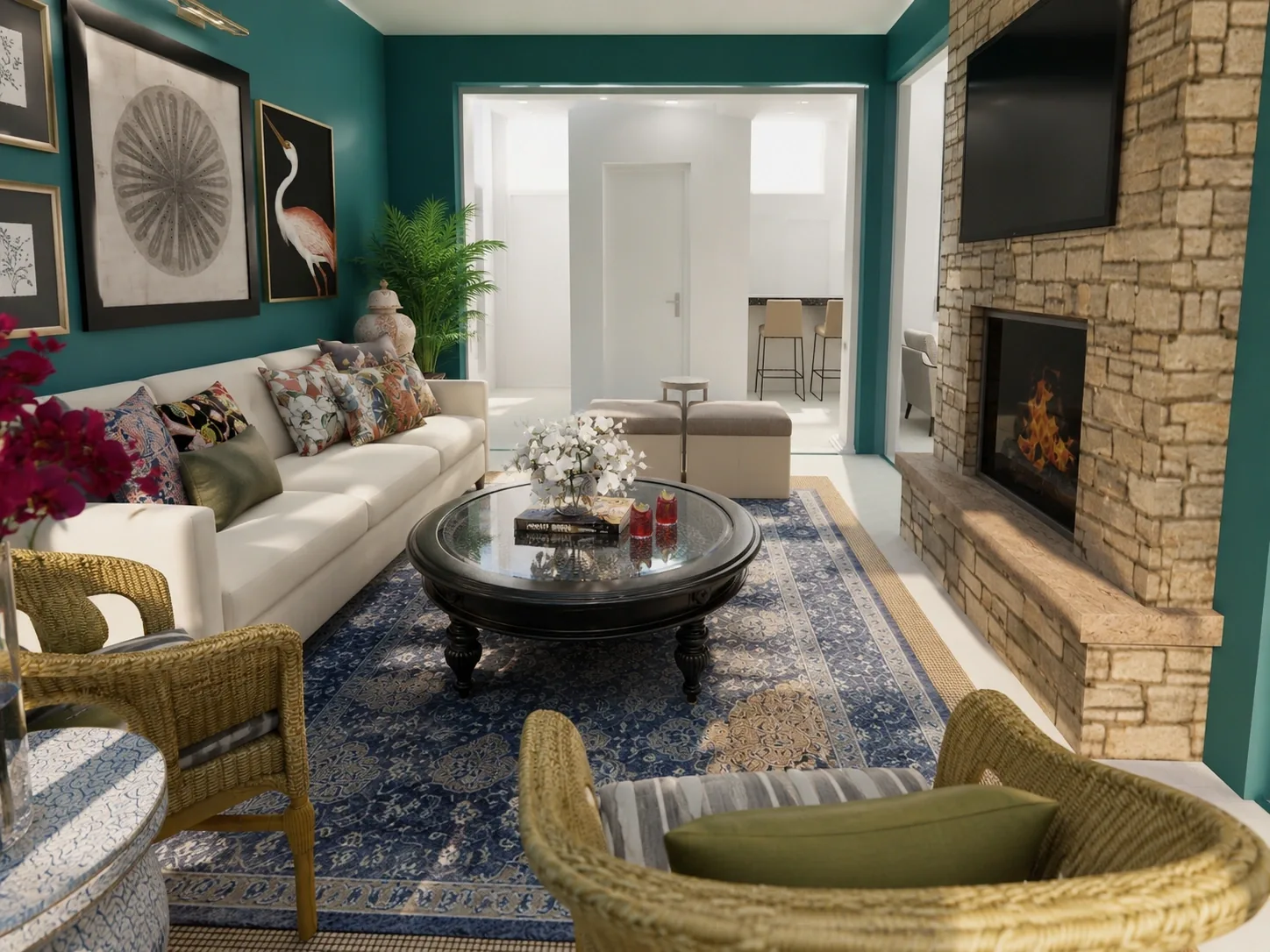
I pay close attention to the point at which an interior photograph stops being able to communicate the room itself.
A photograph can show the color and appearance of upholstery, but it cannot tell someone whether the linen feels pleasantly textured or unpleasantly coarse. It may suggest the sculptural shape of a sofa without revealing whether the cushion construction preserves that shape when someone sits, or collapses so completely that its support seems to disappear.
Temperature is another part of the experience. Marble and metal should offer the physical response we associate with those materials. Wood grain, lacquer and distressed finishes have their own relationships with the hand and with light. When an applied image imitates a material without reproducing its physical properties, that difference becomes apparent in use.
I am equally interested in the movement of light. Wool, velvet, linen, polished stone, raw wood, brass and glass each reflect or absorb light in different ways. Those differences can be quiet, but they make an interior feel responsive as someone walks through it.
A sculptural chair can lose the reason for its shape once someone actually sits in it. In a particularly clean- lined contemporary design, the way a cushion recovers is part of the architecture of the piece. In a relaxed, beach-influenced interior, a seat that wears in and gently changes form may be exactly what makes it inviting. Neither construction is inherently superior. The question is whether it performs the physical and aesthetic role intended for it.
I think of that response across the entire body, not just where someone sits. A rug might look plush but feel surprisingly lifeless without an appropriate pad. The slight resilience beneath the foot can change the experience of walking across the room. The smoothness of velvet differs from the slightly coarser contact of linen, and a chenille may offer a different kind of softness altogether. Those are decisions about the person experiencing the material, not just color or price.
Light also reveals a material's character over time. A hand-worked or distressed wood surface does not catch light quite like a printed finish. A sharply defined edge on a piece of glass or metal can offer a concentrated glint as someone moves past it; textured or frosted surfaces carry light differently. Polished stone, honed pottery, brushed metal, and linen don't all have to compete to be the brightest object. Their contrast in reflection makes the larger composition responsive.
I want a visitor to discover that the room keeps offering information beyond the first view. It is partly a question of sensory expectation: the hand anticipates coolness from stone and a particular resistance from wood. It is also a matter of visual rhythm, in which shine, softness and subtle texture are distributed across the space rather than concentrated in one dramatic finish.
The rug underfoot should offer an appropriate give. The seat should invite someone to remain. The materials should hold their own physical identity.
Subtlety, to me, is not the absence of interest. It is the accumulation of qualities that become more rewarding as someone spends time within the space.